Repairs That Address Punctures From the Inside
Tire Repatching in Atlanta for punctures requiring inside-out patch application and sidewall proximity assessment
A puncture in your tire's tread creates a hole that exposes internal cords to moisture and allows air to escape, but not every puncture location can be safely repaired. 360 Tire LLC provides tire repatching that starts with complete tire removal from the rim, allowing inspection of the interior damage and installation of a patch from the inside out—the only method that seals both the inner liner and the puncture channel itself. Atlanta roads deliver a steady supply of construction debris, road hardware, and storm-scattered objects that puncture tires in locations ranging from safe repairable zones to sidewall areas where structural damage makes repair unsafe regardless of technique.
Professional repatching requires dismounting the tire to examine the puncture path from the inside, where you can see whether the object penetrated straight through or angled toward the sidewall, and whether internal cords show separation or moisture damage. Plug-only repairs performed without removing the tire leave the inner liner unsealed, allowing air to slowly seep through the liner material and moisture to reach the steel belts, causing rust and separation over time.
Schedule a puncture assessment to determine whether your tire qualifies for safe repair or requires replacement.
What Proper Inside Patching Requires
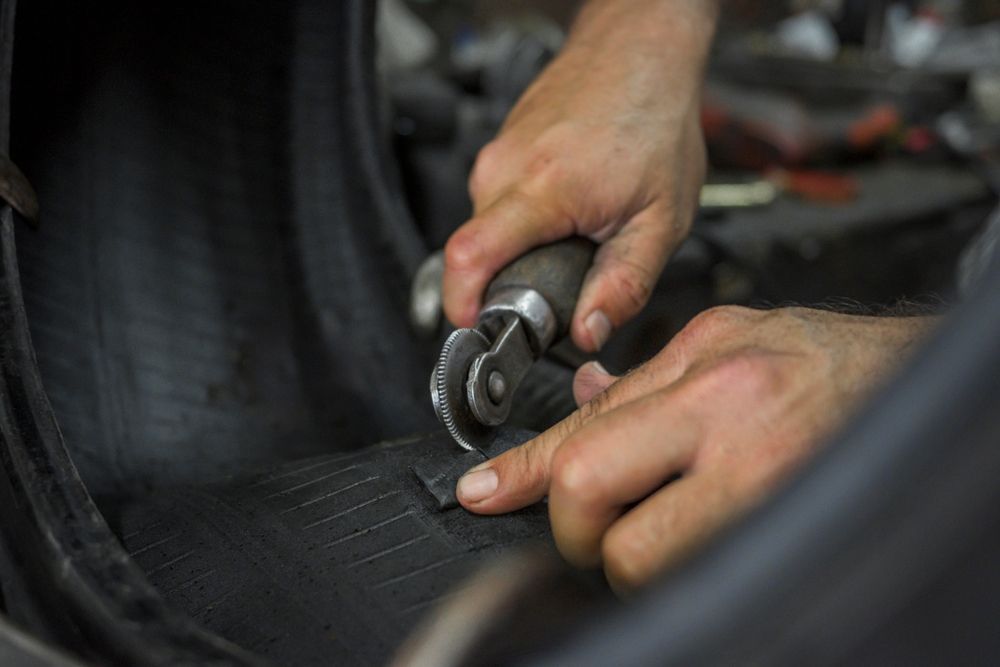
Inside-out patching begins with tire removal from the rim so the interior surface becomes accessible for inspection and preparation. The puncture area gets buffed to remove the inner liner's smooth surface, creating texture that allows patch adhesive to bond with the rubber structure rather than just the liner coating. A combination patch-and-plug unit seals the puncture channel from the inside while filling the hole from outside, preventing the air migration and moisture intrusion that plug-only repairs allow.
Once patching is complete, your tire holds full inflation pressure without the gradual loss that accompanies plug-only repairs, and the interior remains sealed against moisture that would otherwise corrode steel belts. You'll notice stable pressure over weeks rather than needing to add air every few days, and the tire performs identically to its pre-puncture condition with no imbalance or vibration.
Sidewall proximity determines whether repair is structurally safe—punctures within the outer tread grooves typically qualify, but damage extending into the shoulder or sidewall compromises the tire's flex zone where a patch cannot withstand the constant bending that occurs during every rotation. Puncture size also matters, as holes larger than a quarter-inch diameter remove too much structural material for a patch to reliably contain inflation pressure under load.
Answers to Frequent Service Questions
Understanding the difference between safe repair and necessary replacement helps you make informed decisions when a puncture interrupts your driving plans.
What makes inside patching more reliable than plug-only repairs?
Inside patching seals both the inner liner and the puncture channel, while plug-only repairs leave the inner liner open—unsealed liner allows air to migrate through the rubber layers and moisture to reach internal steel belts, causing slow leaks and eventual belt separation.
How close to the sidewall can a puncture be safely repaired?
Punctures must remain within the central tread area between the outer grooves—damage extending into the shoulder or sidewall enters the flex zone where constant bending prevents patches from maintaining a seal, and where reduced rubber thickness cannot support patch adhesion under inflation pressure.
Why does tire removal matter for proper patching?
Removing the tire from the rim exposes the interior surface where you can inspect the puncture path for angling toward structural areas, check for internal cord damage, and properly prepare the surface through buffing—exterior-only plug insertion cannot reveal internal damage or seal the liner against air migration.
How do Atlanta road conditions affect puncture frequency?
Construction activity, frequent resurfacing projects, and storm debris scattered across highways create regular tire puncture opportunities, particularly during spring and summer when road work intensifies and afternoon thunderstorms move tree branches and hardware onto travel lanes.
What happens if I drive on a plugged tire without inside patching?
The unsealed inner liner allows gradual air seepage that requires frequent reinflation, and moisture entering through the puncture channel reaches steel belts causing rust—over time, belt corrosion leads to separation between rubber and steel, creating a bulge or sudden failure during highway driving.
360 Tire LLC removes each tire completely to assess puncture location and internal condition before recommending repair or replacement. Arrange a puncture inspection to determine the appropriate solution based on damage location and your tire's remaining tread life.